

What Saphly Is
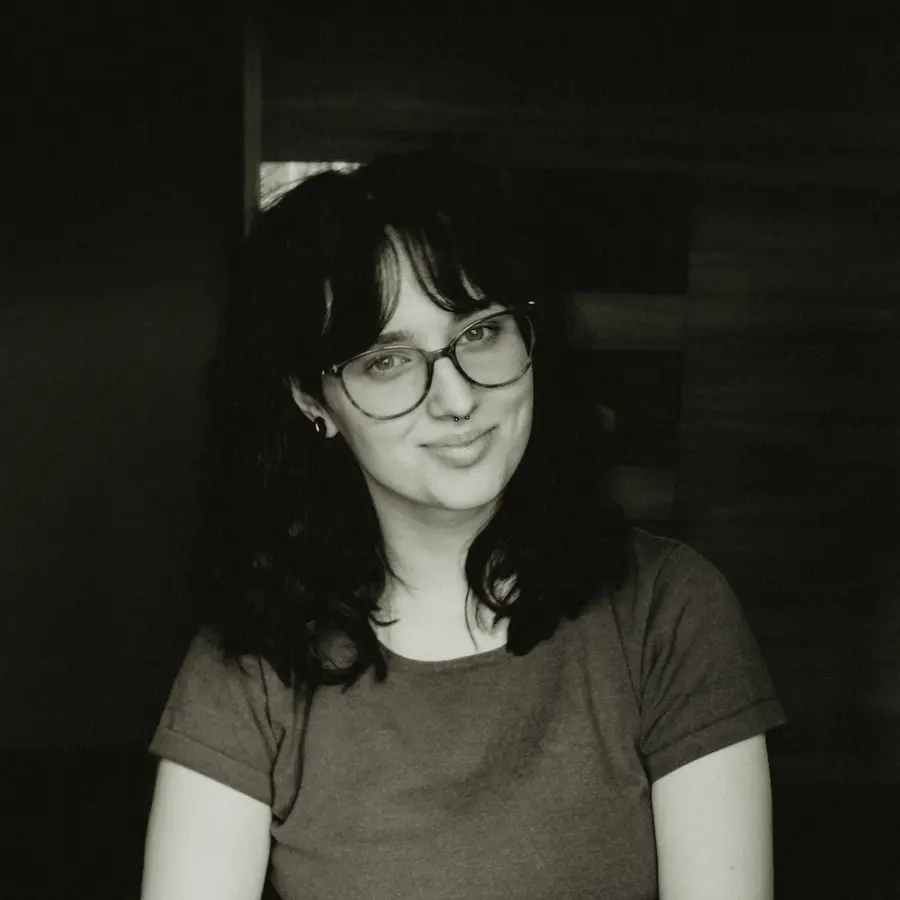
Saphly is a reading and publishing platform built entirely around sapphic, lesbian, WLW, GxG, and GL stories. Founded by Shay H-K Zayit (Shay) and Renāte Spirga (Renee) in 2024, it was built around a simple idea: these stories deserve a dedicated home. Not a subcategory buried inside a general catalog, not a subset of something built for someone else, but a platform where sapphic literature is the whole point and where everything is built around that.
On the reading side, Saphly is a free platform. Most of what's here can be read in-site at no cost. Community-published books are available to read freely by default, with a clean, distraction-free reading experience. Authors can monetize their work behind a per-purchase price or a subscription model, but that's their choice to make. The goal is a space where a sapphic reader can open the app, browse, and find exactly what they're looking for without having to wade through content that wasn't made for them, without having to check if the representation is actually there and isn't fetishized, and without worrying that what they found yesterday will be gone tomorrow because a hetero-centered AI moderation system flagged it for the wrong reasons.
On the publishing side, Saphly operates in two separate models. The first is a community publishing model. Think Wattpad, but sapphic, and built to actually work for queer writers. Writers sign up, publish their original works (or fanfiction) directly on the platform, go through a review process for quality and AI compliance, and build a readership and a community surrounding their works. The second is a traditional publishing model, working exactly like any other independent sapphic publisher. Think Ylva or Bold Strokes Books. Saphly acquires manuscripts it believes in and handles the entire production process from editing, cover design, ARCs, and marketing, to distribution to major retailers worldwide in e-book and paperback formats. Saphly is not and will never be a hybrid publisher. No money is ever asked of authors, at any stage, for any reason.
At its core, both sides of Saphly exist to answer the same question: what would a platform look like if it was built entirely around sapphic literature and the people who want it? If you're reading this, chances are you're already exactly who we built this for, no matter if you're here to read, to write, or whether you're somewhere in between. The people who built this are writers too. Not a corporation that spotted a gap in the market, but two people who spent years on the same platforms, wanted the same things, ran into the same walls, and eventually decided to build what they never had. Everything here—how the catalog works, how authors are treated, how content is moderated, how revenue is split—is an attempt to answer that properly.
How and Where We Started
Our origin story doesn't come from a business plan. It all started with a Discord server back in 2024 and with someone bringing up the idea of a weekly writing challenge. At this point, the rest is history.
Nobody really knew each other back then. Shay had been one of the people to start the original server, and Renee had stumbled upon it by mere coincidence days after, watching from the sidelines as people grew less shy and eventually started talking. Then one of the server members suggested building a simple Discord bot that would send out automated story prompts. Both of us have a background in software engineering and a weakness for a good hobby project, so that same evening we found ourselves coding it up together, getting to know each other for the first time in the comments of the code, beyond the casual chats on the server.
That specific bot, for the record, never actually came to life. But if there's one thing about us, it's that we have a very particular way we like things done and are apparently incapable of leaving something half-built. We had already fallen too far down the rabbit hole to stop there. The server needed moderation bots, and the pre-made options cluttered everything up with their lack of customization. So, what did we do? We built our own, with every feature inside something we had full control over. We wanted games and a points system, so now we have our own custom bot handling games, server events, and those writing challenges that started all of this, all tied together with a points and roles system that gives the community a bit of a friendly competitive spirit.
The running theme is that if something doesn't exist in quite the shape we need it, we make it ourselves. The next thing we knew, we found ourselves asking "what would a proper platform for this community actually look like?" The answer, inevitably, was that we were going to find out. The conversation went from a writing challenge bot to a full-scale platform faster than either of us fully registered. It was always going to be community-first, as that's where the whole thing began, but we made a decision early on to build the publishing side first, get it right, get it running, and then turn Saphly toward what we had envisioned years before. Though every decision always remains a shared effort, our roles naturally became more defined — Renee took the lead on the platform's technical development and design, while Shay focused on the broader business, publishing, and operational side. Around us, a team gradually formed with people dedicated to their own areas of expertise, from editing and legal support to the many other pieces that keep a publishing platform running.
The Gap Saphly Fills
Both of us, the founders, came up writing in online spaces like Wattpad. We genuinely loved them for what they were: places where you could share anything just for the joy of it—fanfiction, passion projects, late-night experiments with no pressure to monetize, all of it alongside a community of readers who'd comment on chapters and wait for the next update. There's something irreplaceable about that.
But those platforms have real problems, and for queer writers in particular, those problems are severe. Content gets removed without warning or explanation, including work that breaks no guidelines and work under contract with the platform, simply because AI systems screw up. Queer stories get buried, and their algorithms and automated moderation tools disproportionately restrict or hide queer content. Meanwhile, such platforms have been flooded with AI-generated writing in recent years, with no meaningful policies against it. There are sub-spaces for sapphic readers on these platforms, and they matter to the people in them, but the content keeps getting caught in the crossfire of systems that weren't built with queer writers in mind. We thought someone should build this properly.
What we mean by "properly" goes beyond just having the right content moderation. We wanted to build something that feels like a community first, a space where sapphic readers and writers can come together, share resources, talk about books, find their people, grow as writers, and be a part of something. A space where someone who just wants to share their first story sits alongside someone who's been publishing for years, and both belong there. That means putting real thought into the things that usually get treated as an afterthought: how discovery works, how readers and authors interact, what information is available to someone who's new to all of this. We try to write about it too—everything from how to publish your sapphic book and what sapphic labels mean, to something as simple as how to read sapphic fiction for free and why that matters, because this is the kind of place where that conversation should be happening.
That also means staying out of authors' way, as we believe a platform that profits at the expense of the people creating on it has its priorities backwards. Authors already have enough working against them. Platforms like Amazon's Kindle Unlimited have real audiences, but they come with exclusivity clauses that lock authors into a single distribution channel, and we're not interested in that. Nothing on Saphly has to be exclusive to us—if an author has their book published elsewhere, self-published on a dozen platforms, or simply wants to post it here alongside everything else they're doing, that's completely fine. The goal isn't to own the content but for a sapphic reader to be able to stumble upon it here, in a space built entirely for them, without anyone having to sign anything away to be there. If a reader finds a book here that they never would have found otherwise, the point is made, and we are happy.
On AI, and Why We Draw a Hard Line
Saphly has a strict anti-AI content policy. It's one of the things we feel most strongly about, and it's not going to change. Generative AI has no place in storytelling or any creative spaces, so we built submission, approval, and moderation processes specifically to keep AI writing off the platform as much as humanly possible... which feels like the right word choice here.
Part of why this matters so much to us is that we've seen what happens to platforms that don't take a position. The flood of AI content on storytelling platforms degrades the experience for real writers and readers, drowns out genuine human work, and sends a clear message about whose creativity the platform actually values. We're not interested in building something that goes down that road and goes against what storytelling should be about; we would rather host something that came from random a burst of creativity, typed up with a million typos on a phone screen in the middle of a sleepless night, instead of something that came from a prompt box and an algorithm trying to approximate what it means to have something to say.
It's demoralizing, watching these two things exist in the same space. The writers who tend to get hit hardest by this are already the ones working against the grain—queer writers, niche writers, writers without big platforms or publishing deals behind them. The ones who most need a space that takes their work seriously. We intend for Saphly to be this place.
Where Are We Now?
So, we started with a Discord server and a bot that never shipped. Now we have a publishing platform, a growing library of sapphic literature, and a community that's only just getting started. It's a strange thing to look back on—the distance between "let's build a writing prompt bot" and where we actually ended up. And it's still a long ways away from what we have planned.
Saphly in its current form is still new, we're honest about that. We're still the same two people who thought "we could probably just build that ourselves", and it's still our pockets that everything comes out of. There are no investors, no corporate backing, no one cutting checks to keep the lights on except us and our ever-growing ambition to turn this into the all-in-one sapphic platform we always wished existed—one where every decision we make keeps both the reader and the author in mind, because neither one works without the other. This is an independent platform, built and maintained by people who care deeply about getting it right, funded by the community it exists to serve. Every subscription, every book purchased, every author who chooses to publish here, that's what this runs on. And honestly, we'd rather be accountable to the people actually using Saphly than to anyone else.
We're not in a hurry to cut corners to get anywhere. This started as something we were building for ourselves and for a community we were already a part of, and that hasn't changed. There's a lot still to come, and we can't wait to show it.